Abstract
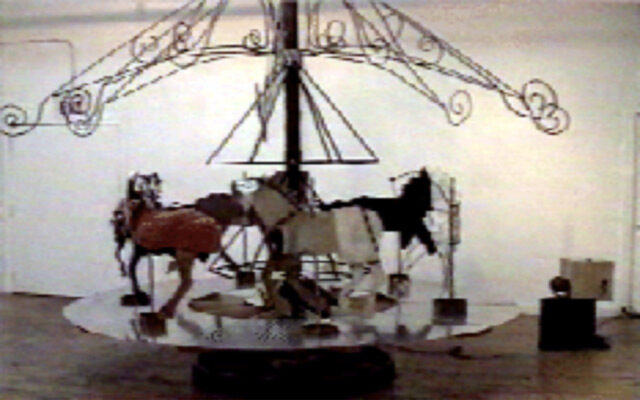
Carousel is a written and sculpural project which portrays an operating animation carousel.
Carousel is a play on words, spoken in a world consisting of unexplored dialects of expression and thought. Allegory, metaphor, metonomy, onomatopeia, are sculptural techniques in this world of literary pursuits. Poetic examples provide demonstration as to how sculpture may encompass and motivate written form. I develop this technique of literary sculpture as The Illogical Dialect of Logic. It is in this dialect of logic that the sculpture of Carousel is presented.
1 Introduction
Animals fear death and experience a sense of privation as a result of the death of others, at times to the point of dying or seeking death themselves. But animals do not know about death. Man, however, has known about it from the remotest times and in the most primitive conditions. He realized that his life was limited -in every sense of the word- by death.
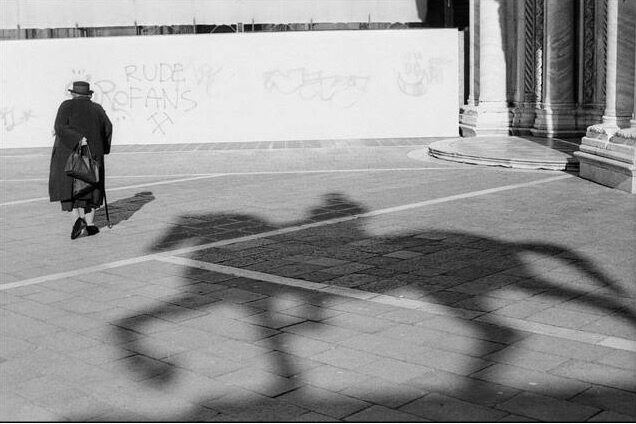
The cycle of life into death and death into life is well known to the langage of metaphor, for metaphor is well versed in symbolic vocabulary. Because of this, poetry, from all its spectrum, allows access to realms which otherwise lie in obscurity. Liscenced by these beliefs, Carousel is an expression of sculpture and writing designed to honor these ideas about the cycle of life and death. It has developed from a seed out of which I have defined a personalized form of expression. The seed I refer to is contained in the concepts of environmental art. This field of discipline has in some respects defined itself upon terminology originating in the 1960's and '70's. These decades witnessed a growth of events that have subsequently been titled happenings, performance art, site works, and art in the land, all of which are encompassed by environmental art. These practices were valid additions to the growing vocabulary of artistic expression that the past century has witnessed by the categories of Modernism, abstact art, the avant garde. I believe, however, that the ground upon which 'Environmental Art' was fertilized existed centuries ago. It was tilled via the machinery of monument and through the activities of ritual and began with man's confrontation with death. Once human civilization acquired some state of organization, sculpture, having began in relation to the tomb, branched into an expression of civil duty. Here monument enjoyed a prolific life in the tribunal sphere of the social-political culture of these early civilizations. My thesis is an attempt to take the monument of equestrian statuary, and incorporate it into a discourse, removing it from the static nature of civil obedience and allow it to revolve in a tradition closer to the secular funerary monuments of the early middle ages.
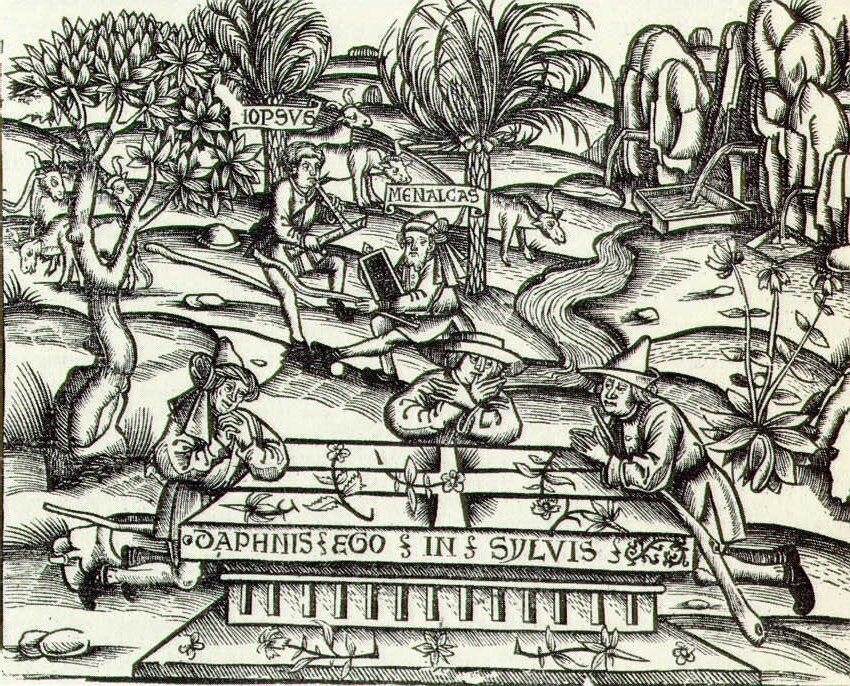
*S. Cobb, "Nicander, a Pastoral Elegy, Lamenting . . . William III":
Where was the Magick which to Plants belong,
So boasted, Daphnis, in thy Sacred Song?
Sidenote: "Mr. Cowley of Plants."
Carousel is the representation of a sculpture in literature, and the expression of literary ideas through a sculpture of a merry-go-round. The written and sculptural parts share an internal structure predicated by an isomorphic logic. Through this logic the two media engage in a narrative discourse. Contrary to a formal logic they speak illogically, denying the constraints of logical thought as if a spider could its web. Imagine a childs delight in stringing words together without reference to logical order or meaning.
Nonsensical phrases, and the magical formulas of fairy-tale often consist of syllables that rhyme or have rhythm. The sentences do not contain the meaning of the words from which they are composed. They are words around words which have no logical connection.
It is with the structure of their sound that they become objects of fascination. Functioning outside of their intended context they lose all sense they originally contained. They flow from the mouth as entertaining excercises in pursuit of linguistic competence.
Carousel may be seen as a rhythmic fluid form. It is the idea of sensible objects revolving around non-sensical objects as the ideas from which it is assembled, and with which we relate, become undermined and decomposed by means of its internal logic. It flows as an incoherent statement of rhythm and rhyme. It is the Illogical Dialect of Logic attempting to probe the edges of the physical world where the laws of logic reign supreme.
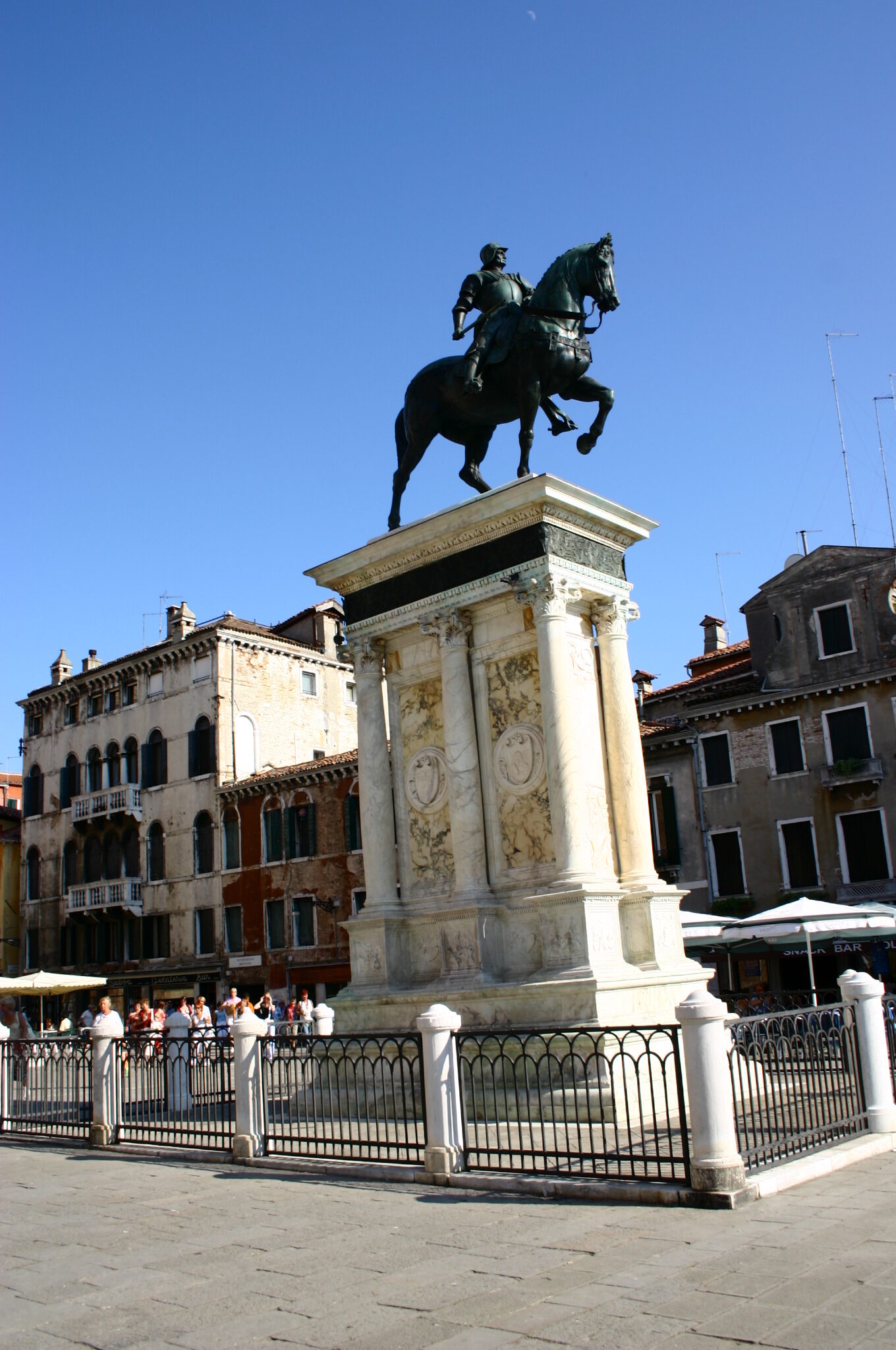
The internal logic is the discussion of carousels within a tradition of equestrian monument. I feel in many ways compelled to justify my mention of logic in relation to a thesis that is centered on horses and carousels. My decision is comforted, on a superficial level, by the fact that logic has played a large role in the presentation and display of equestrian monument. This is testified by the proportions of base related to the horse and rider so common throughout history. Wendy Stedman Sheard discusses these relations quite well in an analysis of the proportions of Verrocchio's Colleoni Monument:
The proportions of the Colleoni Base reveal a simple but extremely beautiful scheme which relates every dimension organically to the height of the bronze horse and rider and their plinth.
Through her analysis she exposes the inherent geometry via golden sections and proportioning of the sculpture. She draws a line down the center of the monument and notes that two thirds of the entire horse and rider are positioned to the front of the sculpture.
This she attributes to the impression of forward motion which is percieved when viewing the monument:
The arrangement counteracts the sublime stability imparted to the marble base by the square, circle, and golden rectangle which underlie its proportions. The horse is however anchored to the design of the base by the left rear hoof, which is tangent to the circle which inscribes the base.
The history of classical thought is personified by rationality. If one were to describe its ethics, a discusssion about Platonic geometry, and its prisoners to pure form, should be included. Carousel physically derives from this classical logic, sharing ideals and relations of geometry with rational intentions. Carousel, however, goes beyond logic to celebrate the illogical and derive an internal contradiction of form. The structure upon which it is constructed struggles to acquaint various octogons, hexagons, and parts incremented in groups of ten. Connected to the geometry of Carousel are swirls, a lace canopy, and horses depicted in various materials which attempt to question how the image of the horse might be represented. The horses are investigations in the manipulation of materials in an effort to depict organic form. Carousel has traits of the distastful; it has fur and it has flowers.
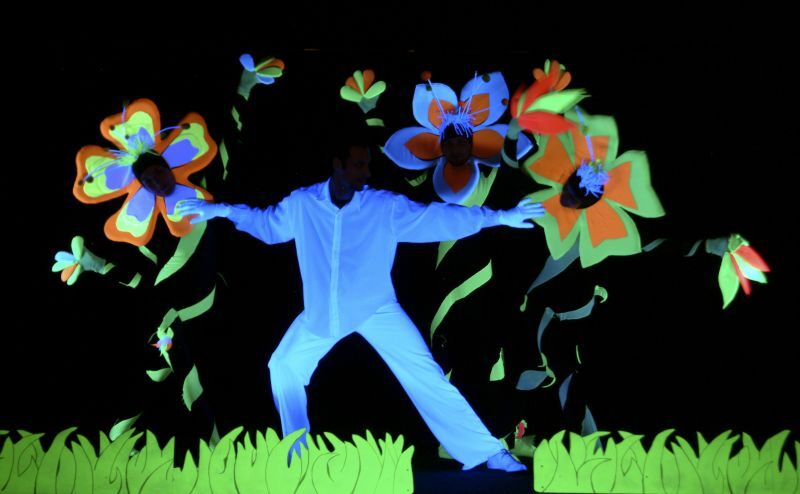
Something crawls beneath its skin to disallow its function as a cohesive object for enjoyment.
A sculpture communicating this idea of contradiction in form is Giovanbattista Piranesi's altar of San Basilio. Illuminated from the apse, facing the back of the church, lies the strict formal geometry of a sphere amidst a solid rectangular structure. To the faithful and attending public is displayed an organized labrynth of chaotic forms; twisted and entangled, clinging to the altar in fear of falling from their lofty position. It is the logic of this altarpiece which I find interesting. The composition of contradictory language in a physical form has led me to pursue my invention. The Illogical Dialect of Logic is that language which has allowed Carousel to exist both literally and physically.

2 Reflections on the Sculpture of Monument
Carousel has been inspired by uses of the sculptural base. One may observe within traditions of sculpture a concern regarding the form of the base. This concern manifests itself primarily in various forms; physically as solid form, intellectualy as context, or perhaps emotionally through complex denials which work on the painful history of the base in sculpture. This chapter dicusses examples of the base in relation to equestrian monument as well as some projects of Vito Acconci, who has used discourse on the sculptural base in a critically entertaining manner.
Much outdoor sculpture has preserved the meaning of various individuals and events in durable three dimensional images. These command attention by sheer physical presence.
When sculpture is placed outdoors, it is freed from the matrices of architechture, and relation of the sculpture to the base becomes more significant. A metaphor of a bearing, enduring structure is communicated in equestrian monument. The austere cold immobility of the horse's stance, carried through to the ground by the base lends majestic qualities of authority to the horse's rider, and accentuates the architectural environment. Monuments are set apart from their surroundings by means of a plinth or some feature which serves to function as a picture frame. Classical thought dictates that the scale and position of large sculpture should be carefully related to its site.
To fit in with the stability of architecture, statuary in general must first of all choose lasting attitudes having firmly established lines so as not to clash with the majestic immobility of a great building by a too literal imitation of life, which suscitates the idea of movement and can only lessen monumental dignity.
Vito Acconci's ideas are intriguing paths through which discussion of the base may follow. Much of Acconci's work has originated from his endeavors as a writer/poet who works the space of the written page in a sculptural technique:
1. Notes on poetry: Words as props for movement, how to travel from left margin to right, how to make it necessary, or not necessary, to turn from one page to the next -Page as thing, the use of idioms, like 'from the horse's mouth, that draw attention to themselves as language: the material exists only as it's spoken, the words circle back on themselves and remain confined to the page, -Page as container, rather than have the page refer to outside space, something from the outside space can be installed on the page, -Page as map, make reading time equivalent to the time required to perform an activity in outside space
In the spring 1989, Acconci completed a sculptural work commissioned by Sculpture Chicago. It was located on a site along Michegan Avenue among such historically prevalent buildings as the John Hancock and the Chicago Tribune Tower. The site was a plaza where Acconci was to install a public sculpture of his own intention. He chose to represent a 40 foot in diameter clock titled Floor Clock . It lied horizontally on the ground and allowed the public to sit upon the twelve divisors of the clock which functioned as benches. The arms of this clock were fully operational. As one were enjoying the sculpture they may be pushed along their way for the rotating arms extended themselves just above the surface of the circularly defined benches.
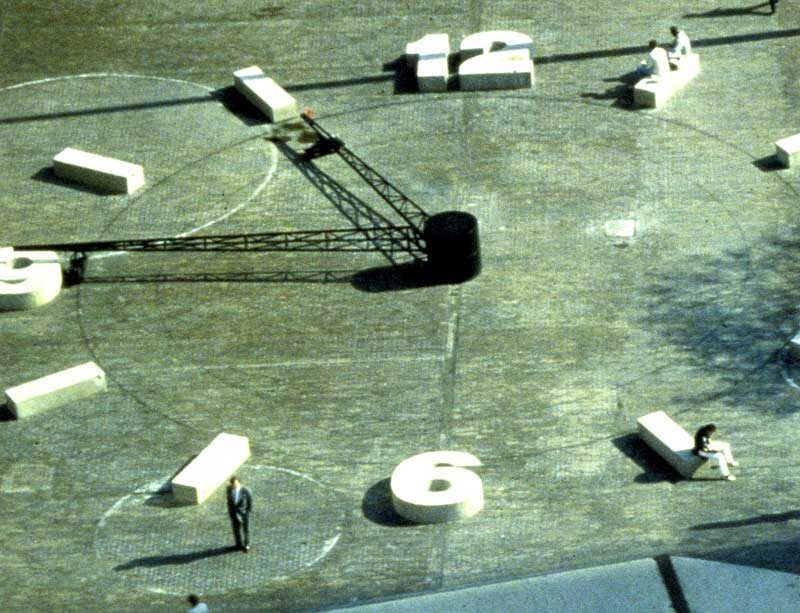
Floor Clock, by being horizontal, did not compete with the architecture by attempting to extend towards the sky. The work was seen from these surrounding buildings as a timepiece. Its overall use as a sculpture of displacement (via moving steel hands over seats) within a complex of overwhelmingly busy pedestrians was successful.
The discourse existing between Acconci's written and sculptural works can be viewed in light of the traditions of sculptural base. Both communicate to their audience an awwareness of the media with which they are executed. In reference to the history, Acconci's works are very good solutions to these sculptural issues of the base.
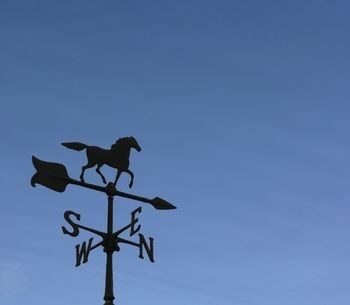
Apart from the traditions of equestrian statuary that have evolved through European origins, I feel much of my work lays claim to the various forms of equestrian statuary that have originated in America, as wheather vanes, sign posts, gravestones, and, of course, carousel sculpture.
The following events represent the sculptural tradition out of which carousel partially emerges. Focus is given to my interpretation of how sculpture is related to the world through base. My personal fantasy about lanterns and their forms is an important topic in this section. Various other forms which are related in abstraction are lampshades, birdcages, and chandeliers.
The equestrian statue is of secular origin, and in the religious art of the Middle Ages a figure on horseback often suggested the vice of pride. Contrarily, the most famous of the equestrian statues of antiquity, Marcus Aurelius, was to be interpreted as the monument to the victory of Christianity over paganism.
I only take some time here to ponder another, less modern, less HIP use of the horse and time. Perhaps more closely related to Myth, and suposition. It is a Danish scultpure depicting, perhaps an older Greek myth, of a the chariot over the sun.
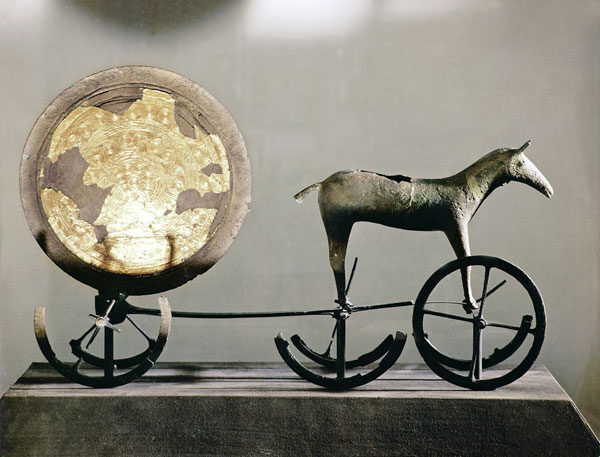
At the beginning of the 13th century, the equestrian statue was resecularized as a monument to civic pride, and liberties. At the same time the equestrian figure invaded the domain of funerary sculpture independently of the statuary having civil intentions. This genre of equestrian statuary, however, did not originate as some monumental image to attribute the deceased with the dignity of a Roman Emperor. It began with small reliefs portraying the deceased in some heroic stance with sword in hand. From these humble beginnings as funerary art it developed into a longlasting and inspiring tradition, especially in northern Italy. This tradition had such far reaching influences that it eventually inspired Donatello's Gattamelata, 1446-1447. This famous monument, while not a tomb, was, however, built in the fashion of equestrian funerary monument. The pedestal was elaborarted into a mortuary chamber. This is attested by the motif of the door of Hades, positioned on the east side and facing the church Santo in Padua.
The agile mechanisms of carousels contrast against the stone bases with which most monuments stand. Carousels are classed according to their functions: calliopes, phonographs, motion picture projectors, merry-go-rounds, and perhaps any other broad class of objects which revolve. Carousels may function by any of the following five methods: 1. hand cranked, 2. mechanically operated, 3. anologue controlled, 4.digitally controlled, and 5. digi-mechani-morphologically controlled.Note, 2026. The fifth kind of control points ahead to the author’s later Mechanical Theater Ktesibios, a generative performance engine in which a networked “machine band” composes and plays in real time beside a live performer. It is named for Ktesibios of Alexandria, an early builder of automata.
All function according to some mechanical relation with time. They characterize the idea of the machine which functions as a biological metaphor pursuing a passage through the vacant moments of our lives. Carousels guard us from these moments so we may not suffer the emptiness which fills these voids. Carousels interject these moments with music, film, and movement.
Yet as timekeepers to our emotions, few have shared our insights and sensitivities as well as the carousels of photographic motion which began operating in the 19th century.
2.1 Equestrian Monument and Cinematic Projection
The equestrian monument stands frozen as the first pole for a dichotomy discussed in this thesis. Placed in public areas, open to speculation and comment, it is a mimetic depiction of the horse and rider. Equestrian statuary has in most circumstances been expression devoted to some hero, primarily out of tribunal reason. Against the equestrian monument are the fluid forms of animation and cinema, shadows of life breathed upon public sculpture from ages past.
Cinema, capable of representing life and motion, claims the artistic expression of the open-air arena and public realm where the equestrian monuments once stood. The moment the magic of the photograph unleashed the mystery of the moving horse, Muybridge, and all the preceding developments of projected moving pictures unleashed a Trojan Horse of the modern era into the cavern of oblivion: the cinema house. The form of the horse was then brought from the statuesque past and allowed to run, with freedom, among movies where the horse played grandiose roles, major and minor. Inside the cinema house and within film, actors and performers fill our imaginations with celluloid realities, while outside the cinema house, cities and parks lie vacant. They are void of meaningful and active forms of expression.
Carousel is a tribute to the motion picture projector as mechanism.1 It is a tribute to the mechanisms and machines which dismantled and freed the horse from having to drag another century's worth of dead weight around. The horse captured within metaphors of timely running machines, encompasses our intuition of horse as a rythmic, fluid, and dynamic entity. The projector, mechanically mimicking the horse's power, as well as animating representations of the horse through film, is the incarnation of the horse in monument. The motion picture projector as equestrian monument placed in the architectural setting of the cinema house, encases audiences in spectacles of epic and performance.
2.2 Magic Lanterns
Magic lanterns were in many repects a prerequisite for the development of cinema.
As well, their constructions offer particularly interesting ideas to concieve of sculptural bases. The term magic lantern applies in general to a boxlike device that contains a candle flame, the light of which could be projected and focused on surrounding surfaces. There is no real telling as to the time of when the first were invented. Magic lanterns have appeared throughout history, and have experienced countless technical innovations. Almost all had the purpose of displaying some image via mystical or scientific purposes. Gradually it became more and more a means of projecting mysticisms and apparitions in various amusement shows and seances. All written cases report some fascination with illusion, whether magical or natural.
1770, descriptions of ghost projections onto smoke; George Schrophen stupified the participants at his seances. He served punch of dubious chemical nature to drink, and disoriented the participants with narcotic incense.
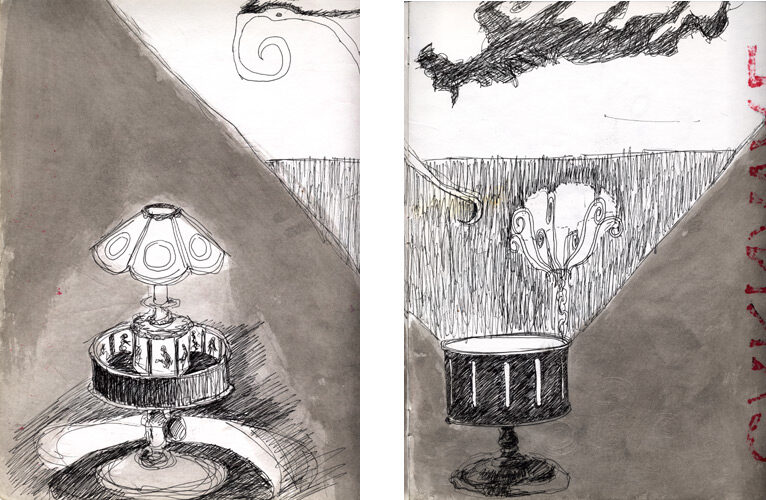
1798, E. G. Robertson, using a lantern on wheels staged his famous Phantasmagoria in Paris -"Will introduce the phantoms or apparitions of the dead or absent in a way more completely illusive than has ever been offered to the eye in a public theatre, as the objects freely originat in the air, and unfold themselves under various sizes, such as imagination alone has hitherto painted them, occasionally assuming the figure and most perfect resemblance of the heroes and other distinguished characters of past and present times."
The theatrical quality and poetic nature of these devices offer continual inspiration.
They vary in size from the very minute to the architectural. Whole light proof rooms were constructed as housings from which projections could originate. No doubt these were some rudiment of the cinema house, as they offer a tremendous medium through which to stage [sentence ends here in both the 1991 typescript and the 2012 transcription]
2.3 The [X]-scopes
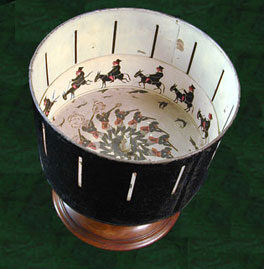
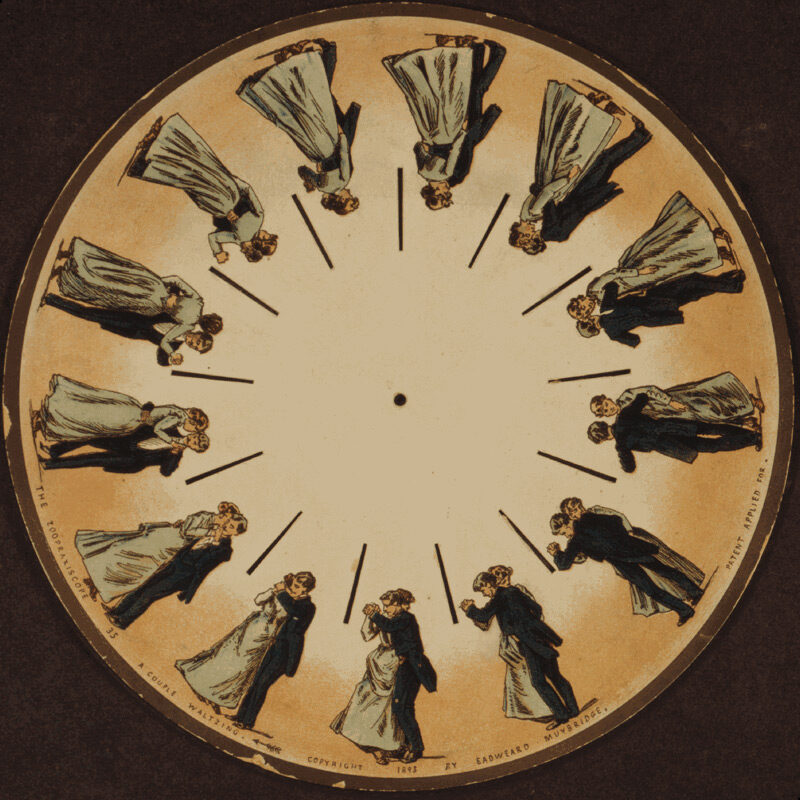
A physical phenomenon which led to the motion picture projector was the observation, made by many early writers, of the persistence of vision experienced when watching rapidly moving wheels and the intervals between the bars of fences as one passes them by at some speed. These observations witnessed the stroboscopic effect which occurs through the spaces of these objects. Numerous inventors incorporated the observations into machines that demonstrated such phenomena with various images.
Stroboscopic observations manifested themselves in an invention known as the thaumatrope; a circular toy with an image on either side, which when rotated, merges the two images. Other experiments blossomed into such inventions as the anorthoscope, the Faraday disk, and finally, the phenakistoscope. These are instruments consisting of revolving cardboard disks which contain a ring of pictures and slots through which one views the moving pictures by mirror.
Many of the various [devised to create the illusion of animation ]-scope machines invented derive their names in English by the addition of some Greek prefix (ie. phenakisto-, anortho-, zeo-, praxino-, etc.) to the suffix -scope. These machines will here after be collectively referred to as [X]-scopes. The [X] refers collectively to the various idiosyncratic prefixes that were used by the various subsequent inventors. Use of this short-hand device is employed to simplify the discussion from confusion with too many names.
1877, The Frenchman Reynaud constructs a [X]-trope where the picture movement is compensated for by a central prismatic mirror drum. This allows one to look down into the drum instead of through slots or lenses fixed on the walls of the drum. Reynaud combines his [X]-scope with the magic lantern in a device he named 'Projection Praxinoscope'.
Reynaud projected pictures painted on glass connected by pieces of cloth to form a looped band which is inserted in the [X]-scope . Moving figures were superimposed on a proscenium projected with a second lantern.
Reynaud subsequently produced three comedies which he used to give performances before large audiences. Reynaud opened his 'Theatre Optique' at the Musee' Grevin in Paris in 1892; by 1900 he had given 12,800 performances which had been attended by 500,000 visitors. Reynaud was the first to use moving pictures for theatrical performances. [Leisegang 86] The use of three dimensional figures laid on the bottom of a drum, was put into practice by Czermak in 1855, and by the Paris physiologist Marey, who fixed ten sculptured models of a flying pigeon (copied from his sequence photographs) inside a very large [X]-trope.
2.4 Carousel Performance
The relevance of these devices to Carousel is obvious. Carousel makes explicit use of this history and owes much to it. It is in these terms that the model of horse developed in chapter 7, is presented, rotated, and projected , in spirit, quite separate from the immobility which perpetuated through traditional equestrian monument.
3 The Sculpture of Carousel
The character and general idea of mythology is what I believe are desires of our imagination which we announce through personified archetypes.
By this I mean to say that our desires are communicated through our imagination.
Ideas common through-out mankind are given animated forms in the shape of animals and human charicature via our imagination. These animated forms occur through-out history in various artistic methods of human expression.
Carousel is my investigation of the forms of animals in the mythology of tombs, equestrian monument, circus and carnival, and kinetic sculpture.
All of these I believe may be percieved through hypothesizing and contemplating ideas about animation.
Isolating elements from each tradition as single frames of film demonstrates how they exist as shifting forms of artistic practice which may be captured in one structural form. Carousel in this context is my use of this structural form of animation: the personified archetype of time and the mechanization of life.
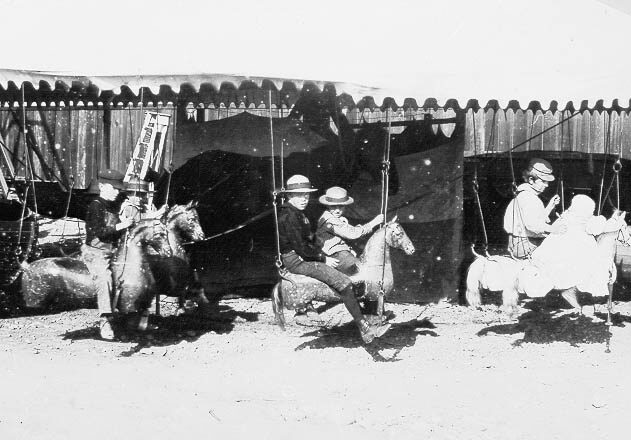
Within a fantastic nonsensical world, Carousel exists in a courtyard, mapping the decay accumulating in its corners across time. It is a dream of a world seen from the outside with uncomprehending eyes, of one cut from reality. It has the quality of nightmare, and displays a world in constant and wholly irrelevent movement. It repeatedly demonstrates the poetic power of wordless and purposeless action.
Language becomes a constant hum; rubble pieced together in an assorted mish-mash of performing marionettes, machines, and lights. The sculptural base as stage, parallels the spoken word, twisted in distortions of libretto. Autumnal clowns lead deathly processions of fantastic creatures across an emotionless setting: Carousel turns round reminding the characters of my play that time is merciless, always intent on moving forward. It is similar to the motionless vanitas pictures depicted in the 17th century by Dutch painters of a new merchant class. Carousel speaks to the still objects in these paintings, communicating to us our fragile placement in an unsympathetic atmosphere.
When narrating a story I find it useful to structure it on some object that communicates the relationships which are important to me. The theatrical effects that result from this have pure physical meanings that express more than could any language.
Language may only be read or spoken, theatre manifests itself in live performance. Pure theatre: the abstract scenic effects of circus, carnival, mime, dance, marionettes, and shadowplay exist independently of words.
3.1 Six Horses
Horses as shadows are pure form, emotionless until viewed in succession. They combine to communicate the pathos they share from a rich and entangled history as abused images of the spirit of animal; unbroken, untamed, raw power. Energy has poured from their bodies, now empty. They are day old fantasies from an innocent dream of survival.
3.2 Mirrors
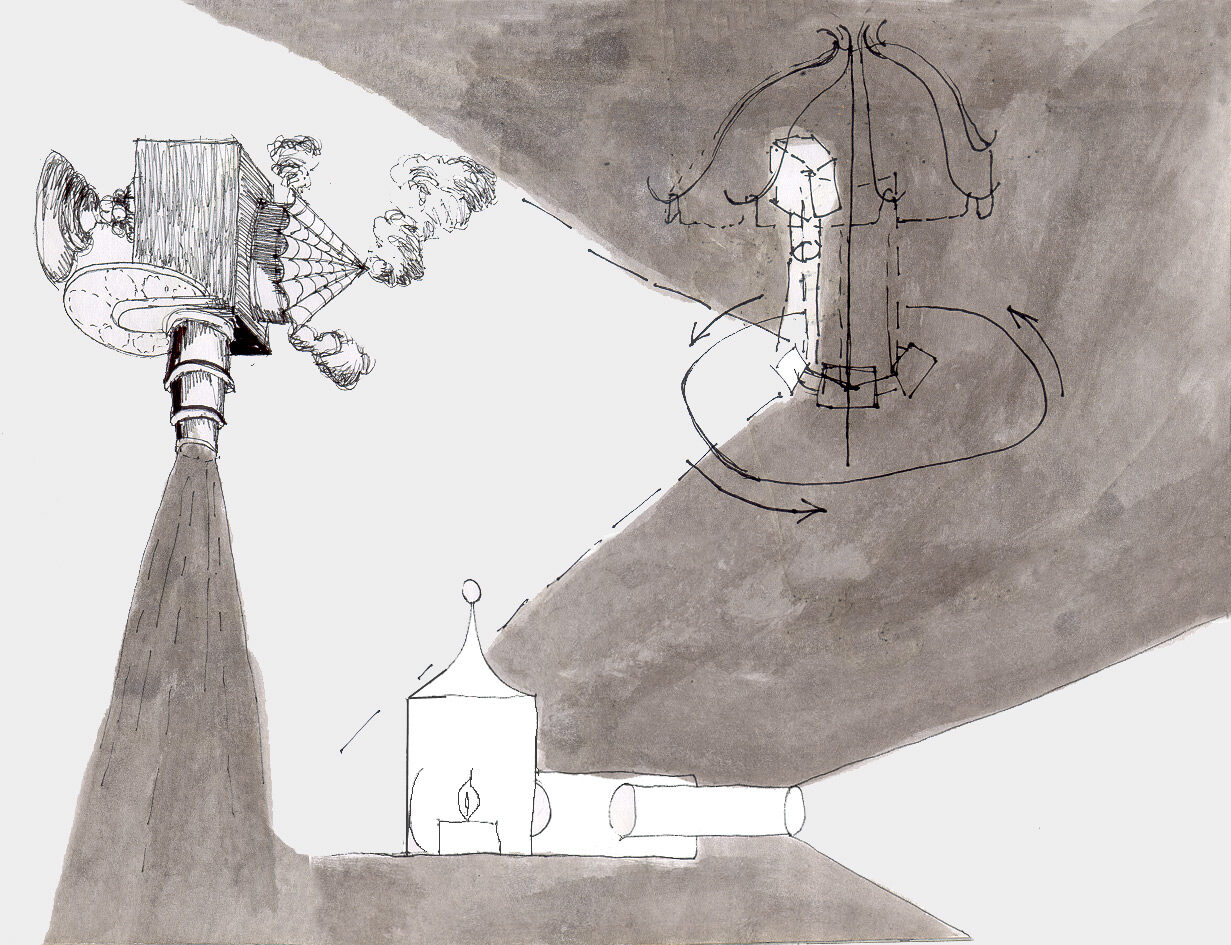
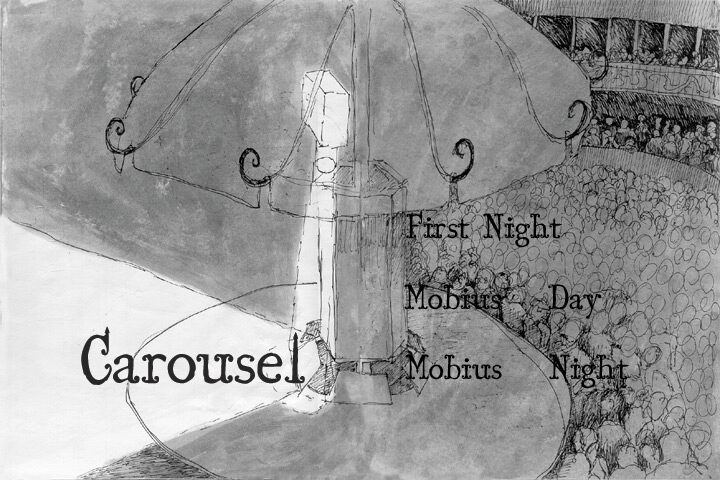
Carousel makes use of a hexagonal pyramid built from mirrored surfaces in a device known as an image derotater. There is one mirrored surface for each horse of Carousel. The mirror, angled 45 degrees from the platform, rotates with the horse. This positioning allows light projections originating from the central column to be mirrored out across the rotating platform. Each mirror produces a shadow of a horse carrying it onto surrounding surfaces and walls. The mirrors bend light in successive flashes at rates equal to the rotation of Carousel.
3.3 Automation
What separartes the automaton from the machine is the relation automata share with time. An automaton is an artificial representation of a human being, animal, or natural object, mechanically endowed with the power of movement.
Carousel mimicks life, imitating it in order to generate gratifying illustrations about its nature. Carousel is a costume. As a mask, it is a pretense which leans towards mockery, a kind of dark ironic theatre.
Carousel is an object of illusion. Its place is a house of illusions. It reflects the image of a horse to produce animation. The idea of the horse in motion forever signifies life, freedom of spirit, and untamed passion and desire; the land of dreams. It becomes a curious postulate, to use the horse, tied to daytime visions, and propose it to be the epitome of a night-time idea, lurking in shadow, awaiting a pulse of imaginative light to bring it alive.
This is what my machine intends to be, a living automata capable of illusionistic projections of desires hidden within a mechanically tuned appartatus. It is a skeleton of thought intended to suspend our earthly qualms.
Motionless, Carousel exists merely as a list of cold metals fashioned together. When set in orchestrated motion, via a single belt driven pulley, it produces the illusion of life, via mirrors, light, and mathematical recursive trickery.
3.4 Ornamentation
Carousel is a bombastic Roccocoan dream of a giddish intention for an over-rated imperialist world. It exists under the skin of an audience who is all too quick to admire a well crafted object of fascination. As camouflage to the realities of a harsh world, there are no questions and no answers, it proceeds in no direction, balancing upon the fraility of its conception. Carousel is a childhood compensation for a favor rendered, it thrives to be sarcastic. Carousel is a contradiction. It is through the language of ornamentation that Carousel is appreciated.
I intend the mere labor, by which I have constructed and assembled Carousel, to speak a passion for a craft that may rise above questions of material pursuit. I wish Carousel to exist outside this sphere of communication.
4 Literary Models
Mimetic: the natural tendency to imitate says Aristotle, combined with a tendency towards rhythm or pattern. The mimetic idea gives us insight into reality, imaginative and interpretative, reflecting a special view. It furnishes knowledge and it's value depends on it's truth.
4.1 Linguistic Form
I derive my belief about literary form from a number of literary examples which use the structure of language to model physical objects. These examples make use of various phonologic, syntactic, and semantic forms of language to give physical property to literary form.
4.1.1 Phonological Form
Onomatopeia was Virgil's device to build drama into scenes of galloping horses.
...quadropedante putrem sonitu quatit ungala campum.
...quadropedante putrem cursu quatit ungala campum.
4.1.2 Syntactic Form
Lewis Carrol made use of logical structures called syllogisms in his literary achievements Alice in Wonderland, Through the Looking Glass, and The Hunting of the Snark. Syllogisms are a deductive scheme of formal argument consisting of a major and minor premise, and a conclusion. They are formulaic statements consisting of three lines. Each line is relative to the major and minor premise, and ends in the third with the conclusion. Syllogisms are deductive reasoning in a subtle, specious, or crafty argument.
Traditionally, there are approximately 19 forms in which syllogisms may appear.
This is to say that if we were to assemble all the syllogisms that have been stated, we could arrange them and abstract from their idiosyncratic vocabulary. From the syllogism:
No philosophers are conceited;
Some conceited persons are not gamblers
!Some persons, who are not gamblers, are not philosophers
We could abstract the form:
(1) No 'x' are 'm'
Some 'm' are 'y'
!some 'y' are 'x'
It is from logical structures like these that there has been found approx. 16-19 syllogistic forms, depending on the logician you believe. [Quine 85]
Lewis Carroll uses structures of this sort to substitute for variables found in (1), various titles, names, descriptions and other trains of thought that are of particular interest to the creation of fictitious worlds. Caricatures of the likes of Mad Hatters, Chesire Cats, and royal dutchesses are given scripts via nonsensical syllogisms, and with these Carroll populates fantastic worlds.
It is through the structure of syllogism, based on reasoning presented by the sentence, which in turn is made up of syntactic form, that Carroll writes his stories. Through substitution of nouns, adjectives, verbs, and adverbs into abstract structures of syllogism, Carroll states illogical relations via pure logic.
What I find in Carroll's playful use of logic and language is a denial of physical boundaries, an affirmation of a world where almost anything goes, to the extent that reason begins to decay. What mystifies and inspires my work is Carroll's ideas to build objects from an illogical use of logical meaning in language. My sculptural imagination departs using these ideas as foundation. Were Lewis Carroll an architect, we might have marshmellows for doorknobs, handages for rooftops, and cheezewhiz weatherproofing.
4.1.3 Semantic Form
Pushkin symbolically and semantically employed statuary and monument, building his works with the static and physical weight of large scale sculpture. This device played a crucial role in his poetic mythology. The social confines imposed upon the artist Puskin account for his particular frozen symbology during this time. One concurrent theme throughout the work was to invest the individual statues with the qualities which represented the wretched and disatvantaged in Puskin's life. One concurrent theme throughout these was to invest these individual statues with the qualities which represented the wretched and disatvantaged in Puskin's life. Puskin's situation reached a level of poetic sculptural expression begining with the investigation of epitaph in relation to sculpture and statue. More particularly the political situation freed the capitulation upon Puskin. And the relation which Puskin took to his writing is the same the poetic works play to the monuments,the destructive monuments, which are characterized in the three works 1830– Stone Guest, 1833–Bronze Horseman, 1834–Fairytales of Golden Cockeral to parallel the monuments erected in honor of the Tsars of Russia:
All of which endeavored to decieve Tsars censorship by means of a masterful tangle of allusions, hidden meanings and allegories. The Symbology within the three poems is likened to favor stiff forms of life and uses of metaphor which suggest a concrete objective coldness to all living figures, and in many love scenes, images of corpse and stone are predominant.
The myth of the destructive statue belongs to the period of Boldine. It is a time of successive autumn stays in Boldine over an extension of 4 years. It begins in the spring of 1824 with the marraige proposal to Natalie Concarova Puskin's invections against Alexander were responsible for repelling Natalie's Mother towards an indefinite and evasive answer to his marraige proposal to Natalie. At this time associations between the age of Natalie's mother and statues are less infrequent.
Everything irrational standing between Puskin his lover Natalie Concarova finds a meaningful equivalent in the power of the stone antagonists existing in the three Pushkin works. Absurd hindrances grow out of certain fictions; poet's happiness depends on the bronze grandmother, provokes an obtrusive thought about death.
- 1830–Stone Guest
- 1833–Bronze Horseman
- 1834–Fairytales of Golden Cockeral
4.2 First Model
Models act as symbolic representations which direct attention to patterns and events in the behavior of complex systems. They structure how we view the world and how we understand the interaction of objects. Models are 'useful-fictions'. They create stories with which to understand reality. They may interpret the literal for the fictional as well interpret the fictional for the literal. They are spectacles which aid our sight.
My first model of sculpture in written form is descriptive. It maintains six components heirarchically governed by a central argument. This heirarchy of six components parallels the six horses of Carousel which spin around a central column. By this method the laws of physics are mirrored by the laws of language. No discrepancy between the two worlds may exist, an error in either world of representation leads to inequality.
The important aspect is a level of mimetic representation between the sculpture in the physical world and the sculpture as it exists in this thesis. If my sculpture consists of plaster and metal, then that should be mentioned here through description. No deviation from the sculptural work occurs that would misinform the reader as to what my sculpture is precisely. While this model requires descriptive information, I reserve the right to add a discourse which includes various uses of figurative language to inform the reader of my motivations and insights. Mimesis, mime, imitation, and shadow boxing perform to accurately translate the details of the sculpture of Carousel.
5 Myth
Myth is the form of the mouth; it is passionate/aesthetic, and historic/explanatory.
Myth, possessing as many idiosyncratic views as there are mouths, is perpetuated by being told and retold. If anything is capable of supporting the idea of inherent structures to human artistic expression, they may be found in myth. Myth assumes various forms in the literature among people widely separate in time and place. Because of this, it is entertaining to contemplate relative similarities in different stories, giving reason of resemblance in myths which are culturally isolated.
Myth may be thought of as the age old game of telephone. Beginning as a spoken message and travelling linearly through various narrators, it arrives to the present in a form divergent from that which it originated. The game operates spatially, in all directions.
Some forms change rapidly, others will evolve not at all, and some appear here and there as slight variants on common themes. Myth can be thought of as a platter which serves the form of the mouth in a banquet of fictions originating from common thought. At opposite edges of our platter contrasting myths are placed. In the center lie historical concoctions which present no inherent contradiction. These myths vary only in some minute detail.
Myth is a slow form of animation. It is projected from an imaginative form as isolated frames of a moving picture, an animal transforming from either one people to another, hunted or scavenged, and brought to some point of communication in time.
5.1 Interpretive Models for Myth
The use of this chapter lies in its extremely brief survey of some issues that I believe exist in a discussion about myth. Interpretation of myth, via models based on language, allow for creative statements on how literary structure may be invented. This chapter is best understood as a beginning for a more detailed development of a creative literary style.
Through attempting a comprehension of the history of language and the means by which it is able to operate, I feel I can achieve a style of literature based upon the ideas of myth's structures of thought. Myth can be examined in relation to the development of language for they have in many respects evolved together. Language is perhaps man's most important accomplishment, and it is through its figurative use that myth has been perpetuated.
Knowledge of the processes of language can only lead to a better framework with which to discuss, interpret, and criticize the world of myth.
5.1.1 Deterioration
The main tenet of this theory is that the telephone game is hindered by inherent defects in our language. Lapse of time causes discrepancies of common facts, moral and religious ideas, and conception. Players farther along in the chain of communication receive diluted and filtered versions of 'pure' truth.
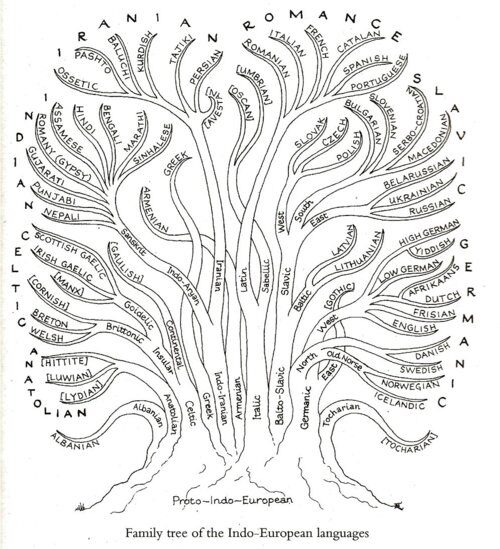
Philology, a method employed in the interpretation of myth, assumes a disease of the memory by reason of which men misunderstand, confuse, and misapply the meaning of words. The philological theory of myth relies heavily on etymology. By tracing the words of a particular myth through various languages it ascertains and brings to light kindred forms and families of the myth. So philology discovers in what language a myth's name is born, and by supplying the original meaning of names is able to throw light on legends and origins of myths.
5.1.2 Progression
The improvement theory states that in the beginning there were only crude dreams and fancies about experiences, life, the world, and God. We gradually develop truer and higher conceptions about nature, duty, art, religion. Subsequent generations then preserve senseless elements through allegory so as not to fully reject past religions. Advocates for the idea of myth's progression believe curiosity (which leads people to question the cause of things) and credulity (which impels people to invent childish stories) to be the characteristics of those who invented myth. Those who upheld myth as fact were supposed to believe that forces of nature, animals, and inanimate objects have powers and attributes of humans. humans were believed to have: 1. Relationships to animals and the ability to be transformed, and transform others into animals and objects. 2. Magical accomplishments such as the power to call up and visit ghosts and the region of the dead, and power over the seasons, the sun, the moon, stars, and weather.
5.1.3 Mythical Structure
Uniform ideas originating among entire peoples unknown to each other must have a common ground of truth.
Levi Strauss studied the unconscious infrastructure of cultural phenomena and focused on the relationships between their units. He regarded the entire domain of culture as an organized system governed by general laws. When confronting myth, the scholar must look for the units of meaning and discover how they relate to one another within a coherent and organized system.
Claude Levi Strauss introduced a rigorous use of algebraic methods and mathematical formulas into the study of myth. All were organized to pursue his central tenet that of the common humanity of both savages and savants, individuals work inventively with what is at hand, this being their cognitive facilities. Their is not an unlimited number of ways in which the human mind can work, humans are strictly limited in the kinds of combinations we can make. We are limited by the distinctive features or oppositions we can play with.Note, 2026. “Distinctive features” and “oppositions” are terms of structural phonology, which Lévi-Strauss took from Roman Jakobson. Jakobson, Fant and Halle, Preliminaries to Speech Analysis (1952), describe speech sounds with a small set of binary features; Chomsky and Halle’s The Sound Pattern of English (1968) revised that system.
Levi Strauss views the relation among myth as 'quasi-biological' in character, analogous to the physical transformations of anatomy and physiology which relate animal species to one another. In this lies the claim that there is one seamless chain of mythological being, a single logical myth. These ideas may be expressed in terms of single logical propositions, and if they are to be understood, these logical terms and relationships must be specified. The specific terms or objects that appear may differ across myths and cultures, but the underlying laws of discourse and the operating constraints of combinations and transformation does not vary.
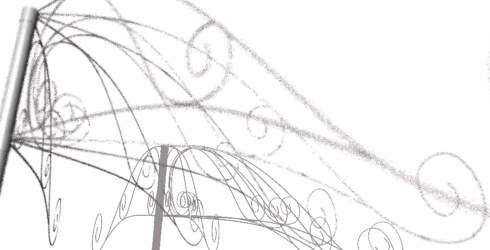
5.2 A Living Mythical Form
Mythological poems are a language of imagination, they are a world in themselves.
They are void from the interconnectedness of actual things. In myth, imagination forms and shapes as it prefers. Myth's great or small circumference mirrors the relations of things, of life, and the fate of men. Magic and science are only a few steps apart, both claim the power of dividing the elements, of using secret virtues of minerals, and of understanding the voices of birds.
The descriptional patterns of myth as abstract concepts of interchangeable logic provide a superficial basis for how an idea of fictions can be interpreted. The introduction of various logical elements from the preceding chapters may be used as methods of construing and perceiving the interpretation of fiction and myth. Intuitively it implies finding some abstract variables and to specify rules for how the component variables may be assembled. These ideas about logic may be put together to form a mesh through which details and characters can emerge as innovative relations between objects. The importance of this to remember is that relations are held together according to a logic underlying the work.
If we take logic for granted, we only have a backbone for myth. It is a web on which the spider's life depends. Any structure may provide shelter, it is what we grasp from myth that we find inspiration. How creatures dance and how the dew may settle on the intricate spider web is what is of interest to us.
A true transformational animal explores these regions of life. It is an architecture that allows us to raise mean and obnoxious children who grow old only to throw sticks and rocks through shop windows. These annoy us, yet again such is myth, the structure who allows us to decide what is good or what is bad. It allows us to appreciate modest ideas.
Myth allows us to walk in the rain.
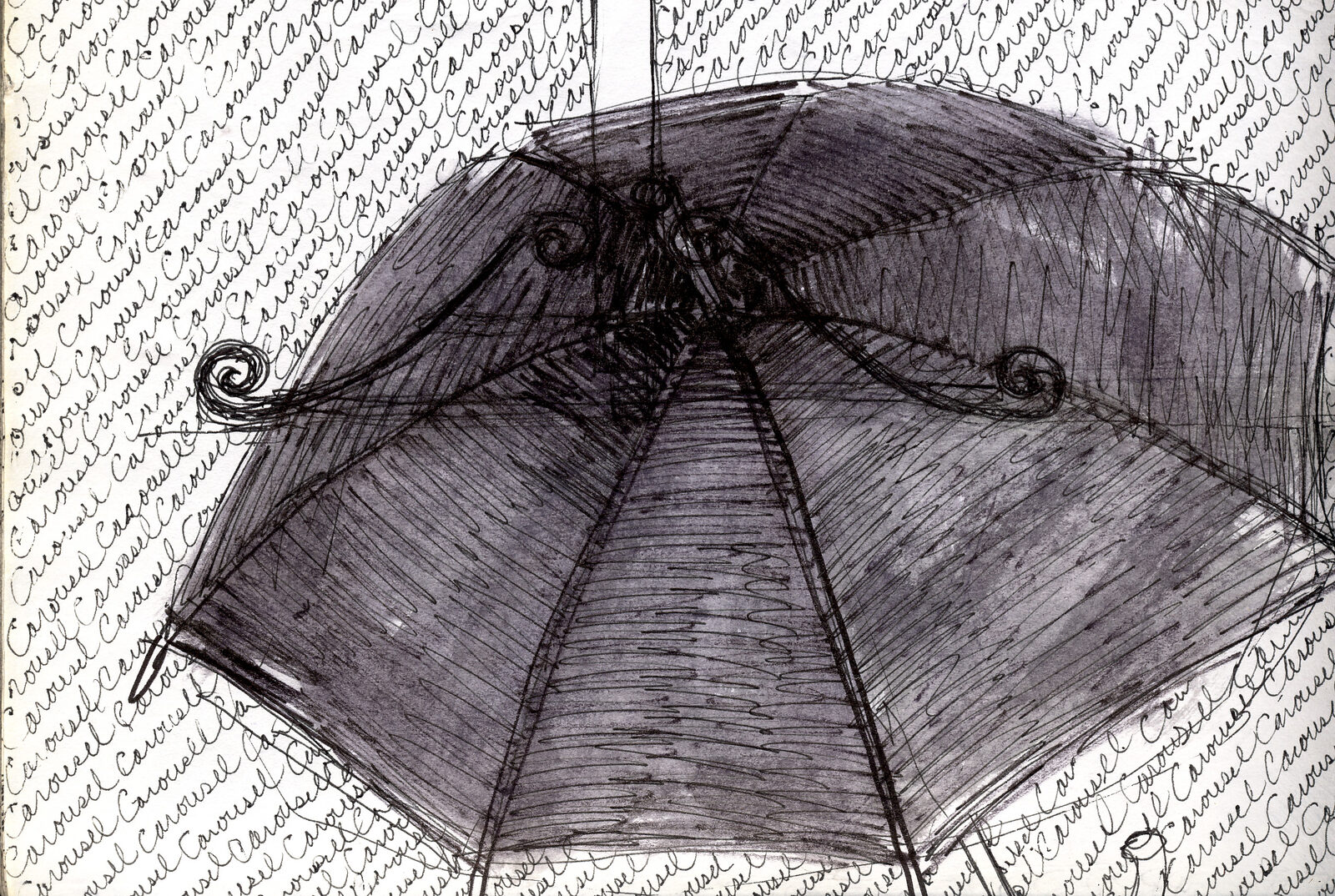
6 A Second Model of Representation: Logical Structures
6.1 Intoduction
Alternatively to the model I presented in chapter four I have a fascination for the idea of the horse as a logic machine which encompasses some pure form of computational puppet/machine. As an automaton machine the logical horse requires rationality. Whether mimetic or not, it must be stated in formal languages through concise and clear notation.
This is the language of the engineer, the state of innovation, and stated well it is the state of the art, and so is encompassed by art. Logic is the language that makes it possible to construct the machine, the technological language allows people to know and communicate.
The limit of technology is comparable to the level of our logical language.
In this chapter I present a model of a language and notation derived from different literatures on logic. The model will be based upon a constructed theorem of logic. Variables of this theorem will be filled, or rather bound, with my own objects which I have written based upon more primitive theorems.
6.2 Formal Language
To accomplish a heirarchy governing six components I might supply a statement which is supported by six arguments. Each of these arguments would reason towards some following argument. Each proposition then argues for some next proposition. This method, continuing through to the final argument, produces a spiraling or circular method similar to how proofs in formal logic are presented. This could be a reasonable way of modeling my sculpture through a written work. It requires me to make some formal statement and argue for it with six other statements. The acceptance and validity of the whole will rest on the validity and quality of interest of my six constituent statements. Each constituent statement would represent a sculpture of a horse by some method. This method differs from a mimetic model. Instead of descriptive statements assembled in some whole idea, abstract elements called variables will represent the building blocks of description.
6.3 Mathematical Notation and Language
The model of a central pole upon which we construct six consecutive arguments leading into one another is conventional. It concerns primarily the methodology of formal logic and the reliance on the use of a proof. This originates from the traditional logic developed by Aristotle. I suggest a more concise logic. A logic advocated by either H.V.Quine or Lewis Carroll uses symbolic notation which can be used to represent or render whole statements and thoughts. These systems of logic rely on inherent structures within human thought for their reduction to such primitive constiuents as 'x', 'y', 'z'.
A logically true statement has this peculiarity; basic particles such as 'is', 'not', 'and', 'or', 'unless', 'if - then', 'neither - nor', 'some', 'all', occur in the statement in such a way that the statement is true independently of it's other parts.
Consider the classical example:
(1) "If every man is mortal and Socrates is a man then Socrates is mortal."
Not only is this statement true, but it is true independently of the constituents 'man', 'mortal', and 'Socrates'. No alternation of these words is capable of turning the statement into a falsehood. While the individual words in this statement do infact contribute significantly to the meaning attributed to any idiosyncratic combination of those words there is still no denying the inherent structure of this statement.
Parallel to how we may interchange the words in the statement "If every man is mortal and Socrates is a man then Socrates is mortal" we could just as easily say: If every car runs on gasoline and Volkswagens are cars then Volkswagens run on gasoline.
That there is structure was an observation we might attribute to the symbolic logicians who used their symbolic system to describe not only the above statement, but various other arguments and statements which may be said to approach the number of total possible statements in language. This system is not only concise but the symbols it employs, despite obvious differences, portray a somewhat illustrative characterization of the literary structure I am seeking. Mathematical logic may not be represented on the basis of simple constituent phrases such as (1), it accomplishes something quite different. Logic supplies a finite set of terms and a syntax for construing these terms. From this finite set of syntax and terms an infinite set of propositions may be generated.Note, 2026. Cf. Noam Chomsky, Syntactic Structures (1957), which treats a grammar as a finite system of rules that generates an infinite set of sentences. The “theory of government and binding” named a few lines later is Chomsky’s framework of the 1980s (Lectures on Government and Binding, 1981). I use the syntax of logic to model how Carousel may be constructed in literature and evolve in time. Any constituents developed would be combined through a linguistic theory of government and binding. It is how logicians use thier tools to describe language that allows my model of artistic tradition and change. According to this I would search for a descriptive grammar which allows the statements I require for a systematic analysis and creation of literary form.
6.4 A Notationally Descriptive Model of Carousel
To specify movement: 1. Specify an object 2. Define all transformations 3. Give objects different values or properties at differing times at designated intervals.
6.4.1 Proposition
Propositions define our world. Following several proposed theoretical frameworks [Chierchia and Ginet 90] I define a proposition as a function that associates with each relevent 'world' or 'circumstance' a truth value: true with the circumstances in which it is true, false with others. Worlds, equivalent to circumstances, are capable of holding some linear point on our time continuum. Each position on a time contiuum is a 'possible world'.
Propositions are sets of worlds with which they share agreement. Which specific worlds accepted by a given proposition determines what that proposition affirms or negates in that point along a time continuum. Structure is implied through quantification of the component parts. Homogenous parts used to construe a single entity are universally quantified. Single entities will require existential quantifiers.
6.4.2 Form
The structure of a proposition via the circumstances it affirms, whether alone or with other propositions, determines form. Form flows and is capable of assuming any shape.
Form depends on the relation between propositions. In addition to this, any set of propositions may also determine a particular form. It is the nature of these sets existing in a particular circumstance which are considered the expressions of a certain era. Which propositions refer to one another, affirm one another, or negate one another contributes to the form of that set. Sets may be embedded in a single form just as sets may be proper subsets of other sets. Choosing what set of propositions to consider is to determine form.
For the whole set of propositions existing there exists one encompassing form.
6.4.3 Archetypes
The usual way to specify a class is by citing a necessary and sufficient condition for membership in it. Alpha is bound to a given occurence of 'Alpha' if it stands in a formula beginning with the given occurence of 'Alpha' and stands in no formula beginning with a later occurence of 'Alpha'.
The Ideas expressed concerning propositions, motion, and form allow for a much fuller desciption of archetype. How various instances of these same forms occur (or rather recur) is what will be known as an 'archetype'. 'Archetype' is here not what we might hypothetically refer to as some shared cognitive 'unconscious' meaning. 'Archetype' is what will be used to refer to objects that share the same propositional space in our model of worlds. Archetype will be used to define various configurations that our time continuum may assume. This amounts to saying that we will describe archetype as various manifestations of form that seem to recur along our linear/planar time vector. Common patterns will be referred to as names and our set of names will comprise the set of archetypes.
It is not mandatory that at every point in time there be a categorizable pattern with which we can assign an archetypal description. Conditions of formless time will be described as generative and irregular. Generative is used to describe new patterns of form in the time continuum. A generative archetype is categorized from a future perspective because these may only be looked upon historically as 'new' archetypes. Irregular are those patterns or configurations which have held no previously similar pattern. Because they occur between periods of regular pattern the irregular will often be reffered to as transitive.
Irregular patterns are also active, for given any new pattern with which it is similar the irregular suddenly becomes regular. And it is by this definition that an irregular archetype may suddenly become generative.
Fountains, equestrian monument, towers of various odd sorts, and other public forms of expression which will be discussed, comprise the set of individuals which may exist in our world. From these may be found one encompassing archetype which I label as the animal of art. This archetype is equivalent to the superset of forms which have existed in the time continuum. The name 'animal' is chosen as it provides the poetic power of eliciting the idea of a changing organism. It comprises the set of propositions and how we trace their development through various instanciations, which describe their interaction.
6.4.4 Time and Rotation
To allow for movement of time I consider not only propositions and forms comprising archetypes, but as well I consider these entities at different times. Logical space may thus be represented as having two coordinates, 'w', and 'i'. Propositions should be thought of as non-continous regions of this logical space, as sets of world (w), time (i) pairs; sets of circumstances. This can be thought of as saying that propositions are objects which make statments about particular spaces at given times.
What this really amount to is an understanding of a world where archetypes are easily defined and communicated. They are delineated by associating with each and every object, one and only one ordered pair, (w,i). 'W' is the logical space of some proposition, and 'i' is the instance in a continuum of time where 'w' occurs. Only the first component of the pair, the domain, may be of the form (x, y, z, ...). The range of the ordered pair must be one and only one instance from a continuum 'T' for time.The linear model of time is better described as a plane which moves outwards in all directions. Whether there is a proposition or more at a given time point determines the breadth of the plane at that particular moment.
Depending on the number of propositions at a time coordinate our plane may extend in any direction.
The time continuum is alive. It may constantly under go growth depending on which past present or future worlds are affirmed. The time contiuum contains infinitely many propositions at a given moment so propositions are able to exist in parallel.This depends on whether the propositions in question refer to one another, negate one another, or simply exist with no reference at all.
6.4.5 Animation
Animation consists in stating a particular transformation to occur to an object that exists in our logical space. Our objects are propositions, individuals, archetypes and forms and worlds. A transformation entails specifying a beginning value for one of these objects at a time 'i' and then changing the value of that object at a differnt time 'ii'. The value of the object changed may be represented by color, light, shape, position, etc.
The skill in calling values which communicate some sort of meaning or relevence may be termed choreography. It is the choreography of objects which allows our worlds to become animated and full of life. When these movements are given varying degrees of logical and illogical interactions we begin to interpret our world in varying states of dream.
When our dreams reach a level of confusion our ideas reach states of fascination. But in the pursuit of fascination we risk jumping into the territories of incoherence; at this point state a new proposition, and give it another transformation.
7 Horse: A Composition of Literary Devices
By its capacity to serve as a substitute, the stick becomes a horse in its own right.
Puppets are distinguished from mannequins and dolls who do not rely on any means of operattion. The simulation of movement and gesture takes precedence over realistic representation of form. Puppets and marionettes concentrate on the mimetic duplication of human characteristics.
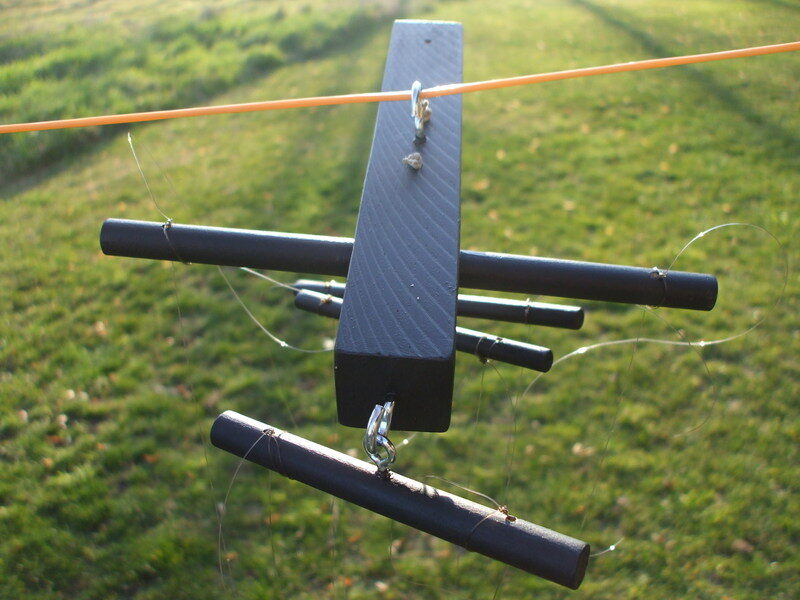
7.1 Horse
Is a horse a noun, a verb, a preposition, or an adjective?
Marionettes capture personalities which I believe the six horses of carousel must share. Marionettes represent certain poetic aspects which manifest themselves in the equestrian statues of carousel. Marrionettes are mechanical characters who operate upon a stage. They are physical objects that must be controlled by some external force. This has traditionally been accomplished by means of string, that dange from above the performance stage. When pulled allow the various marrionettes parts to become animated. The marionette I describe in this chapter is no doubt inspired by these examples. However, my horse marionette will be quite different in that it will be a marionette of literature, peformed and controlled through writing and words. The combinations I make, as well as my ideas will construct from words an animated mechanical horse of words.
How philology uses etymology provides an example about my idea of a horse. I intend to define an object with words that can represent the physical characteristics of a horse. My horse of words will interact in a literary space, as horses are able to interact in our world. The etymollogy of literary terms as a set of primitives define an abstract object that can be said to represent the meaning of a horse literally.
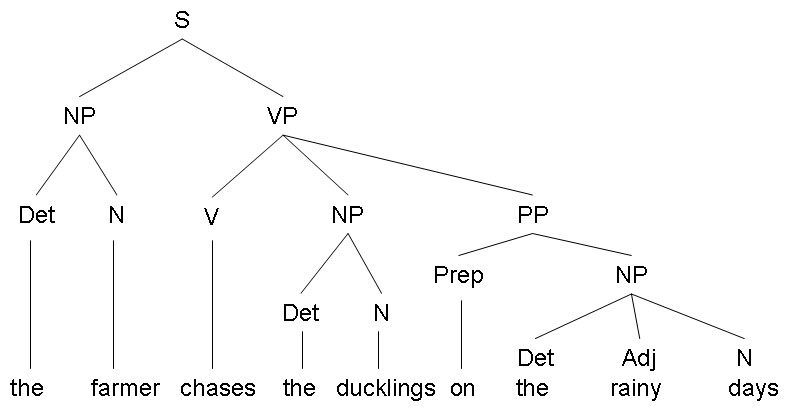
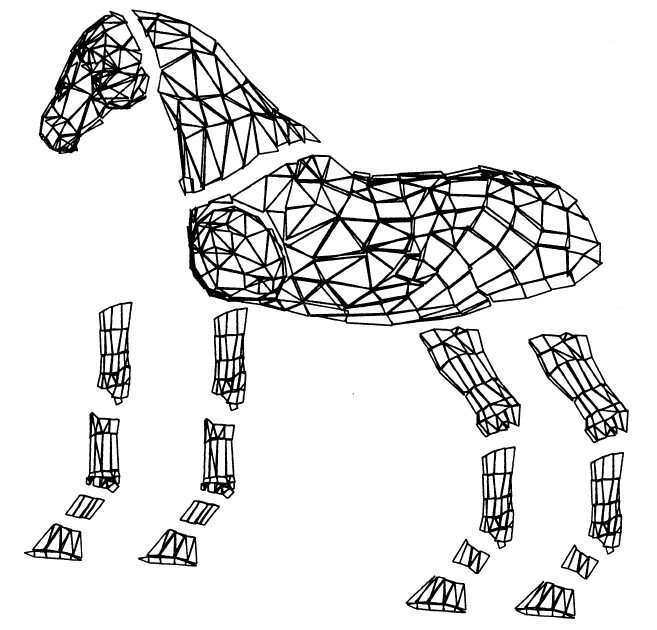
The final mechanism will among other things depend on a system of heirarchies which are stated to be various properties of the horse. Heirarchy in the horse structure is specified as a phrase structure. Phrase structures are devices employed in the study of sentence structure in the science of linguistics. They specify, through what is refered to as 'trees', relations between various components of a sentence.Note, 2026. Phrase-structure rules, and the trees that display them, were formalized in Chomsky’s Syntactic Structures (1957) and Aspects of the Theory of Syntax (1965). The notion of a head that determines the character of its phrase was developed in X-bar theory (Chomsky 1970; Jackendoff 1977). Some component will apply to bind internally the subsets of the sentence. This is often called the sentence head, and it normally occurs 'high' in the tree. In my model grammatical heads will be substituted by the various parts of my horse. The phrase structure operates metaphorically as the strings to a complex marrionette of my horse. The geometry and movement describe how the various properties interact The movement is continuous through a single rotation.
The device must be able to divide the rotation into equal divisions, and return our object at equally spaced positions through the rotation. It remains to be said what comprises the parts of my horse.
7.2 Primitives
The following two sections discuss terms for the specification of a horse. These will be used in the construction of our models of form. Logic binds the defined relations together. Through this combination of devices and objects, puppets, wind-up mechanical toys, and illustrative block constructions can be made. These are not strictly defined, but characterize ideas that communicate an operating mechanism for a written marionette. A horse serves as an example for the final model of Carousel.
7.2.1 Devices
The following devices are tools which can structure thought and expression. Each has its own paradigm and loyal history of contributors. My ideas about sculpture incorporate the use of these devices in a process that elaborates their definition:
Mimesis; imitation, mimicry.
Mime; the art of portraying a character or a narration through movement.
Onomatopoeia; the naming of a thing or action by a vocal imitation of the sound associated with it.
Personification; incorporation of human qualities into inanimate nature, animals, and abstractions.
Reflexive fiction; fiction in which the reader is reminded directly or indirectly that the story is artifice, the creation of a writer, who is consciously shaping all the narrative events and elements, not reporting facts to draw the reader into a consideration of the creative process as well as that which is created.
Denouement; the final outcome of the main dramatic complication in a literary work.
The outcome of a complex sequence of events.
7.2.2 Objects
Objects are heavy matter with which sculptors are familiar. Objects are made up of much smaller units. These smaller units are chosen from a list of symbols, words, letters, illustrations, and diagrams. How these primitives are assembled determines whether they are of the following categories:
Archetype; an image, plot pattern, or character type, that recurs frequently in myth , religion, folklore, or literature. The original pattern or model of which all things of the same type are representations or copies: prototype.
Imagination; attributes of life are bestowed upon inanimate things and abstract ideas.
Metaphors; perpetuate and diffuse the poetic illusion. Metaphor is th implication of likeness or analogy between two entities without the overt usage of either 'like' or 'as'. It is an imaginitive comparison between two dissimilar things where a word or a phrase literally denoting one kind of object or idea is used in place of another to suggest a likeness or analogy between them. Metaphor stems from the Greek 'meta + pherein'. 'Pherein' being a verb meaning 'to bear'. Metaphor therefore carries the connotation that it 'bears' the meaning with which it is in reference.
Metonomies; we use the sign for a thing signified. Metonomy is a figure of speech consisting of the use of the name of one thing for that of another of which it is an attribute or with which it is associated. It also stems from the Greek word 'meta-' and the word 'onymia'. 'Onymia' being a name or word. The connotation derived from the Greek stems is meta-name or meta-word, better described as a 'name for a name'.
7.3 A Mechanical Horse
The movement of the marionette has a center of gravity. It is controlled from the interior of the figure. The limbs are not but pendula followed by themselves in a mechanical way without further assistance. Limbs describe curves, and the whole figure, assumes a rhythmical movement similar to dance.
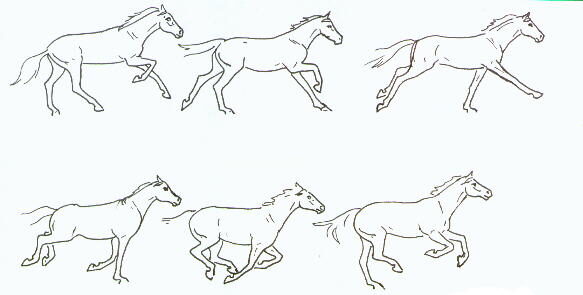
To say that an individual horse has a particular property, is to say that horse is in the extension of that property. And extensions of properties are sets To say every horse has the property of galloping is to say that every horse belongs to the set of galloping. From here it remains to be stated what other sets are in the set of galloping as well. (ie. Objects are sets of sets) The following is a sample computer description for the movement of the mechanical horse. The language is LISP.
(defun walk (step)
  (step-counter)
  (moveleg1 step)
  (moveleg2 step)
  (moveleg3 step)
  (moveleg4 step)
  (walk (+ 1 step)) )
(defun step-counter ()
  (cond ((= step nil) nil) ((= step 8) (setq step 1)) (else nil)) step)
(defun moveleg1 (step)
  (movepart1a step)
  (movepart2a step)
  (movepart3a step)
  (movepart4a step)
  (movepart5a step))
(defun moveleg2 (step)
  (movepart1b step)
  (movepart2b step)
  (movepart3b step)
  (movepart4b step)
  (movepart5b step))
(defun moveleg3 (step)
  (movepart1c step)
  (movepart2c step)
  (movepart3c step)
  (movepart4c step)
  (movepart5c step))
(defun moveleg4 (step)
  (movepart1d step)
  (movepart2d step)
  (movepart3d step)
  (movepart4d step)
  (movepart5d step))
(defun movepart2a (step)
  (setq cw (entnext))
  (cingrab1)
  (cpoint1)
  (amble3 step) )
(defun cingrab1 ()
  (setq cope (entnext cw))
  (if (and (= (cdr (assoc 0 (entget cope))) "INSERT") (= (cdr (assoc 2 (entget cope))) "ZAG1")) (setq help (entnext cope) cr (entget cope) ) (and (setq cw cope) (cingrab1)) ) cr help)
(defun cpoint1 ()
  (setq cw2 (entnext))
  (coingrab2) )
(defun amble3 (step)
  (cond ((< step 5) (setq cr (subst (assoc 10 cer) (assoc 10 cr) cr))) ((>= step 5) (setq cr (subst (cons (car (assoc 50 cr)) (- 0.15 (cdr (assoc 50 cr)))) (assoc 50 cr) cr) cr (subst (assoc 10 cer) (assoc 10 cr) cr))) ( else t))
  (entmod cr)
  (setq yea (entget help))
  (entmod yea))
(defun coingrab2 ()
  (setq cope2 (entnext cw2))
  (if (and (= (cdr (assoc 0 (entget cope2))) "INSERT") (= (cdr (assoc 2 (entget cope2))) "SHOLD1")) (setq ccr (entget (entnext cope2))) (and (setq cw2 cope2) (coingrab2) ) ) ccr)
All horses are the set of all sets to which all horses belong. One horse is the set that contains all the sets to which that horse belongs.
A determiner combines with a set to produce a set of sets; determiners are functions from sets of individuals to generalized quantifiers:
1. set1 = semantic value of an object, (x). Where 'x' is any object.
2. set2 = semantic value of an quantified object, y(x). Where 'y' is both a determiner and a quantifier (ie. determiner(object) = quantified object).
8 The Position of the Horse in Bestiary: A Carousel of Animal Form
My motivation to include ideas of bestiary in this thesis are twofold: 1. There are different sizes, shapes, and kinds of animals in the genre of American carousel sculpture.
They include horses, rabbits, lions, pigs, giraffes, cows, peacocks, reigndeer, sea horses, tigers, dragons, camels, cats, and elephants. 2. My idea about Carousel involves a belief of a revolving mythical form (which I describe as an animal) which merges many forms of expression into a coherent structure of human sensitivity.
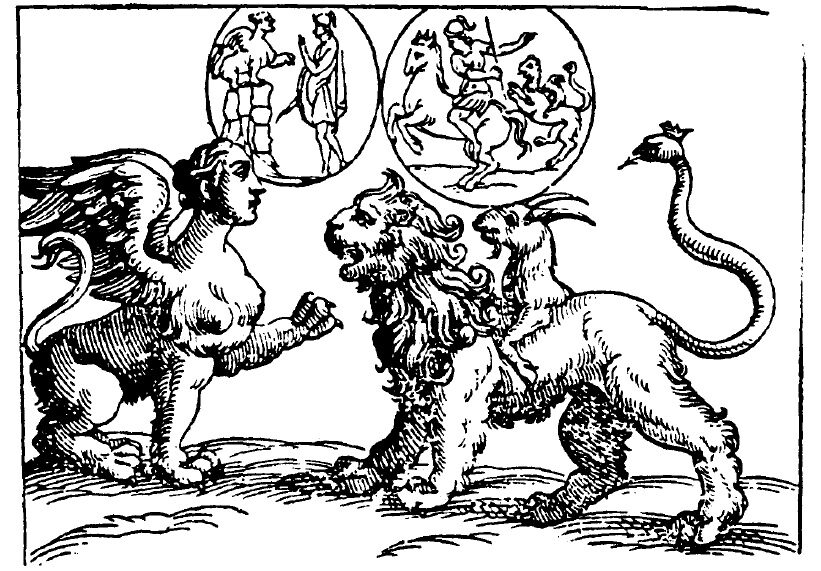
A creature that captures my feelings toward this animal of mythical form is the chimera: Because of this uncertainty of form, she becomes more of a verbal than a pictorial symbol. She who, in myths, was purely a fiery apparition, without a voice or a history was to become in the early days of modern philosophy the en rationis, the creature of language, the metaphor of metaphor.
8.1 The Character of a Horse
The idea of the horse discussed in this thesis belongs to the collection of animals found in bestiaries. This is because the nature of the horse construction from various illogical parts should not be placed among the general class of horses. My horse belongs among the variegated mish-mash of anatomically incorrect animals who reside in legend.
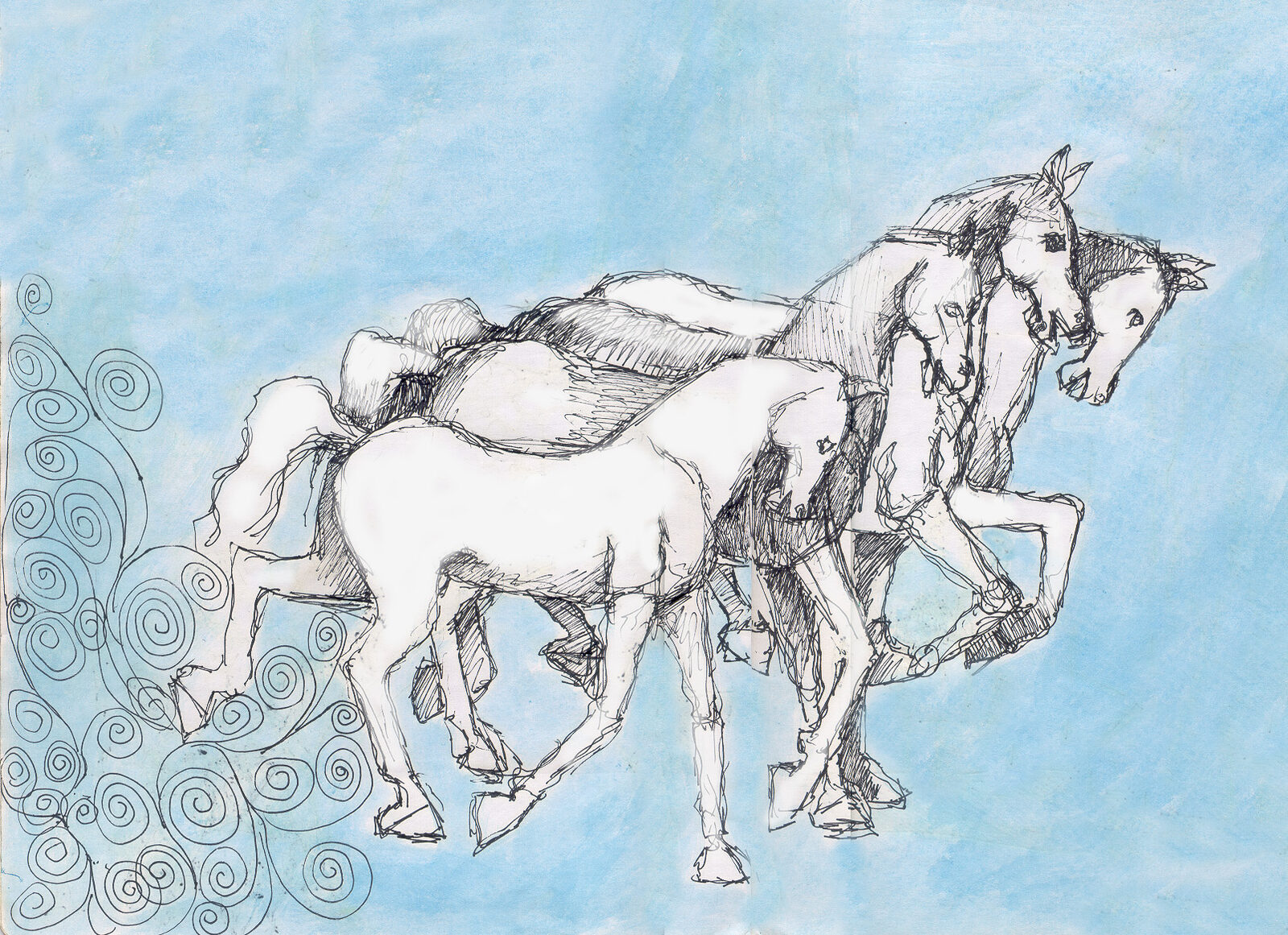
Horses are sensitive animals. The entire surface of a horses skin is extremely sensitive, it quivers at the slightest touch. Their ears are extremely mobile. When presented with an unfamiliar or unexpected sound they become tense and listen with the greatest of attention. The movement and proportions of a horse convey thoughts of force and power.
Their bodies are thick but not heavy: the shoulders are set back on a wide chest, the thighs are muscular, the legs high and slim, the hind legs are strong and nimble, and the head is supported by a voluptuous neck.
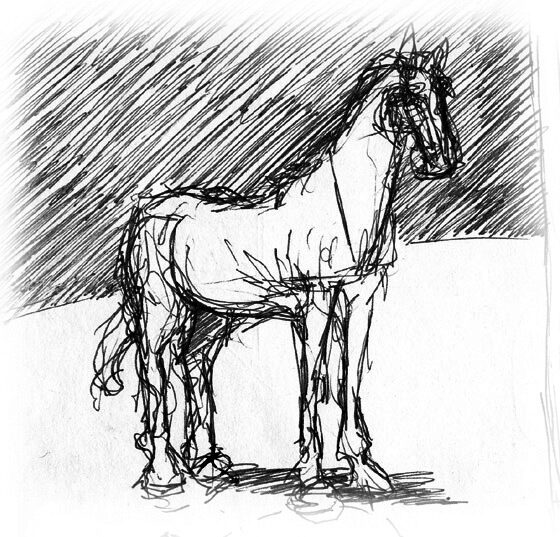
A metaphor of enduring structure is percieved in the use of horse in equestrian monument. The austere cold immobility of the horses stance lends majestic qualities of authority to the figure in the saddle. Carried through to the ground by the architectural base this accentuates the environment.
To fit in with the stability of architecture, statuary in general must first of all choose lasting attitudes having firmly established lines so as not to clash with the majestic immobility of a great building by a too literal immitation of life, which suscitates the idea of movement and can only lessen monumental dignity.
Literature contains references which seem contrary to the nature of horse. Characters of structure and proportion, versus agile and balanced mechanisms allows the horse to become a location for these dual references.
8.2 Bestiary
The Circus Maximus was not a great circle, contrary to the meaning of which the Latin word refers. It was five days of gladiatorial games, races, and combats where a slaughter of over five hundred Numidian lions occured. This gallant fiesta was accompanied by chariot races, equestrian riding, and acrobatics. All events which seem, in the most ironic sense, worthy of such a cruel destruction of animals. For the opening day of this event, a parade graced through the city. Horses pulled chariots and wagons were drawn by mules and elephants.
The bestiary is a still life where a certain specific set of relations hold.
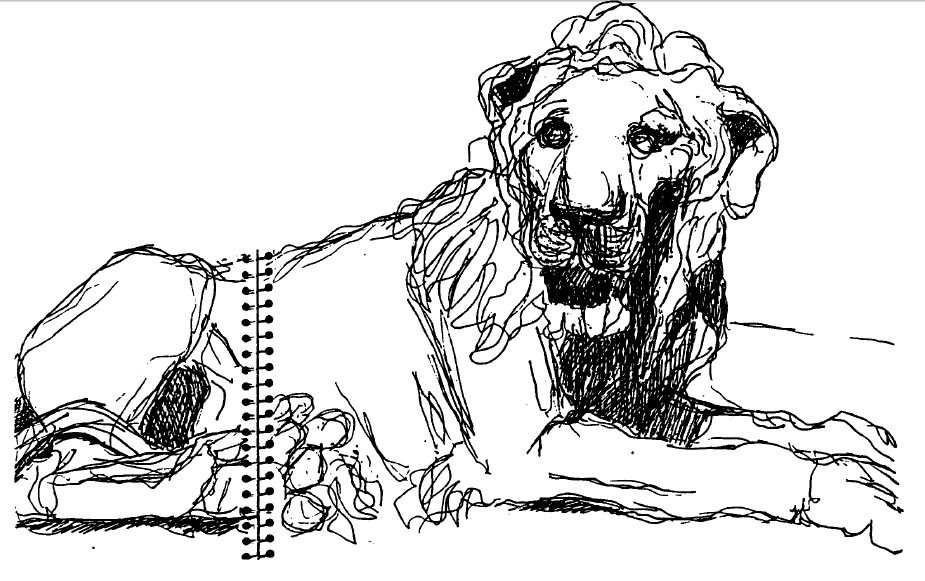
The representation of animals in the early epochs of sculpture embodies the whole industry of symbolism.. Animal forms were the means by which ideas recieved material expression: the lion was symbol of courage ; the cat, of mysterious prudence and treachery ; the hawk, of avidity; the cow was sacred image of beneficient fecundity; the serpent , the owl, were the emblems of watchfulness; the soaring bird signified the upward flight of the soul.
The natural forms of animals are not strictly adhered. These include cats, monkies, vultures. Other species are associated in chimeric images: rams assume the claws and tail of lions, which in turn assume the head of a man or woman. Much of Egyptian and Syrrian representation of animals depicts only the more expressive and decided features.
8.3 A Revolving Bestiary Which Transforms Animal Form
Sculptural kinetics reside in the movement of mechanical parts and poetical dynamics reside in the generation of the different aspects of language. It is this idea that has lead me to pursue how different art forms and literary expressions are used to express common propositions; how expressions may arise from the same logical form. How one interprets the shift and change from the different manifestations and their underlying similar propositions is what shall be referred to as the animal in art. Carousel is a bestiary of my ideas about animal form.
The absence of an architectural element in environmental art gives fluidity to these forms of our era. Carousel attempts to revolve the immobile image of the horse around an axis, projecting outwards upon the walls of an encompassing architecture the roving spirited forms and uncaged energy of the horse.
One evolution of form is the manifestation of various horse propositions that come from the tradition of equestrian monument. These propositions have evolved through the history of animation machines and the motion picture projector into the art of film and the technology of digital video. This evolution has involved the substitution of artistic variables into logical statements and other literary devices.
9 A Revised Literary Model for Carousel: The Illogical Dialect of Logic
9.1 Background
The formalizations discussed in chapter 6 are mechanical devices for manipulating language and ideas. This chapter is a perverse world where objects do not adhere to the gravity of formal languages. Language is a device capable of transforming literal physical worlds. Words and illustrations, as objects, have weight and mass. Machines are empowered through these strings of words, shapes of form, and optico-illusions. They are dictated by the laws of the Illogical Dialect of Logic; a defunk version logic.
Distinction should be made between standard mathematical logic as it is discussed in chapter 6 and my idea of an Illogical Dialect of Logic which I introduce here. I use knowledge of mathematical logic as a language to develop a dialect of logic where physical laws are neither clean nor ideal. Objects perform in contradictory ways, and physical laws obey a faulty language system. Analogies between the normal context of a word, and a new context into which it is introduced is the fuel by which things progress. 'Hokus-Pokus', applied to machines, allows the functioning of nonperfect situations.
The components in this thesis describe a model for developing a creative world within which objects and events may be placed. Models are useful for perceiving the world.
They order perceptions by bringing forward aspects which perhaps were not noticed before.
9.2 Mirrors
A contraption from which Carousel has been patterened is the zeotrope. Zeotropes are projection mechanisms which provide the illusion of animation by means of a revolving prism. These prisms are image derotaters. Image derotaters are mirror faced polygons consisting of one face for each image to be derotated.
Mirrors are magic. Many notable tricks, put to use by magicians, involve the use of mirrors. Mirrors assembled at angles play curious inusions on our eyes. Black curtains, blackened assistants, and controlled light are important, but these in no way reduce the magical significance of the mirror. Double exposure in cinematography depends upon the use of a mirror positioned at a 45 degree angle. This, merging two images into one, allows complex superimpositions and the creation of mysterious depth in film.
Figurative speech depends on multiple levels of speaker meaning. The same is true for rhetorical strategies. The point of ironic utterances is to caricature an echoed utterance by performing essentially the same spoken act in a manner designed to suggest that what the locution explicitly expresses is inappropriate. This presents those who utter it as stupid, insensitive, or unsophisticated by mockingly imitating them. A speaker may utter an expression that is conventionally informative, yet convey that information secondary to the speakers intentions or perhaps not even as a purpose at all. There is an explicit level of meaning, and an implicit level on which something else may be meant, these two levels may contrast and effect each other to varying degrees. [Chierchia and Ginet 90] Fountains, equestrian monument, towers of various odd sorts, and other public forms of expression comprise the set of individuals which exist in our world. The world I describe is one where motion-picture projectors are designed as time-keepers for logical spaces.
Each logical space, equivalent to an individual circumstance, makes the whole of history a large collection of motion picture devices
9.3 Animation
Animation (anima) produces worlds of wide variety in forms of physical objects.
Carnival and circus are theatres where transformations of beastiaries, and animal forms perfom in evolving spectacle.
Animation is composed of beautiful layers of recumbant images. The image existing in the frame, however, is only a fraction of the creative energies that are confronted in a successful animation. Other significant aspects include the script, the stoy-board, and perhaps most importantly, the relation of the movement to sound. This relation is often one of proper timing. Timing relates a specified duration, the length of the performance, to the passage from scene to scene, and sequence to sequence, including the actual movement of the action.
9.4 Projections of Form: The Six Horses
Vestiges of living form, illustrated by the representation of animals delineate the movement of this living structure. Reading these traces we see that this movement of a living structure is one of a passage, a passage that may shift from the literary style of metaphor to the literary style of metonomy. The movement from the tradition of tomb and shrine to the tradition of animation demonstrates a shift from a concern with simultaneous meanings and simularity to a concern with succession of time and contiguity. Projections of moving form produces physical objects through carefully geared relations.
One evolution of form is the manifestation of various horse propositions that come from the tradition of equestrian monument. These propositions have evolved through the history of animation machines and the motion picture projector into the art of film and the technology of digital video. This evolution involves the substitution demonstrated in logical statements and various other literary devices that will be defined.
9.4.1 Nina
Editor’s note. No text under this heading. The 1991 List of Figures gives Figure 9-2 as “Nina; Sheltering,decorative and ornamental” (image not available).
9.4.2 Pinta
Editor’s note. No text under this heading. The 1991 List of Figures gives Figure 9-3 as “Pinta; Metal work and caging, birdcages, chandeliers, forging” (image not available).
9.4.3 Santa de Kaleidascope
Editor’s note. No text under this heading. The 1991 List of Figures gives Figure 9-4 as “Santa de Kaleidascope” (image not available).
9.4.4 Helter
Editor’s note. No text under this heading. The 1991 List of Figures gives Figure 9-5 as “Helter; Rotating disk animation.” (image not available).
9.4.5 Skelter
Editor’s note. No text under this heading. The 1991 List of Figures gives Figure 9-6 as “Skelter; Six horses skeletons, redundant-frail wire forms.” (image not available).
9.4.6 John
Editor’s note. No text under this heading. The 1991 List of Figures gives Figure 9-7 as “John;Variable controlled motor, constant and in flux.” (image not available).
10 Possible Worlds for the Model: Carnivals, Landscape, and Societies
Contrary to any intuition of Chimera as beast and so within bestiary, chimera ws not mentioned in any bestiary of the Middle Ages. Chimera did not exist, rather chimera was structured according to some landscape or rather an allusion to time. Chimera is material for interpretation. The concept of landscape and time gives unity to such diparate elements as mountains, sun, trees, animals.
People are hooded in cloaks, colors are colors, and if you have not walked straight up to now, it is time to turn back.
10.1 Situation
Carnival opposes the cold austere architectural setting from which equestrian monument is placed. If there is anything which represents the dialectic relationship to the contained, highly designed settings out of which the tradition of monumental art stems, it is the idea of carnival, where so often the form of the carousel is found. The placement of this Carousel sculpture in a world of carnival is very important.
10.1.1 A Carnival of Form
The idea I describe may be regarded as a 'Carnival of Sorts'.
All things are contained in a pronounciation dictionary from which a set of formal rules are written. To attend the Carnival, words slur, ideas faulter, and questions about reality arise. There is a side show of illusions. It functions as a merry-go-round. Upon the merry-go-round we turn in circles, going everywhere and nowhere at once.
10.2 Cigarette Smoking Ghosts and Horses
It must be told, around the dismerable dens from which they come, that I have many shoes. There have been many nights when two, three, or maybe up to five of these miserable carcasses, have placed their stinking hands upon the soles I wear to and from my studio. Whether weather, the market, or their travels abroad, they dig into conversation and dwell quite long. What it is they discuss is foreign to me.
It is a cold dark morning, the kind you really never find a valid reason for leaving bed. Rain caresses a window sill above where I sleep. He tells me he can soothe the shards of my broken dreams. I dropped them in the shower. They rippled and washed to the edges of that desolate place.
How has it been that on this unforsakable day they roll their hooves over my forehead until I am left to beg for each quiet moment I want to spend alone.They converse in the murmer of my hesitations, prolonged in the silence from which I discover their secrets. Stripes like dots, the horses approached my presence beside the bed. They come with out any warning what-so-ever. I hide behind the bedpost simply waiting for a moment I might steal for a door. Like a knife they turn towards my diminishing efforts to remain hidden. I, myself, had fallen asleep an hour ago. They carry me towards the door. I pretend to sleep until they set me down. What is it they want?
How many pajamas are required for forgiveness?
Nine?
Well I you just never learned how to count.
I have seen the home of these fiends, who have left many an ash in my pair of gabardines. Like rockets they waited for me to enter their charming stone mausoleum embellished with all sorts of crafted decor. Upon the moment I crossed the threshold they were swarming amongst the caskets which for centuries have been pondering the absence of their inhabitants.
Outside of a misplaced curiosity, to find a secret or maybe two, what has brought me here to explore the home of my nightly visitors.
Shoes, all kinds of shoes -dress shoes, mocasssins, sandals, sneakers, golf shoes, clogs, high-heels, low-heels, glass shoes, slippers, hunting shoes, gollashes, sew-ups, stitched shoes, sport shoes, and spikes, all strewn about the crawling place; upstairs, downstairs, on the patio, under the veranda, in the side door, out the back door, around the tombstones, and behind the entranceway. Thieves I thought, for who but a lot of despicable demons would collect such a monstrousity of exotic shoe types and sizes with which to adorn their wives and children? I wonder now why not a single pair of my own shoes had not made it to this fine collection of foot wear.
It is this answer which now I must seek. I rightly admit that I had by now accumulated quite a jealousy against this bunch. I believe they now sensed my apprehension for they began throwing all sorts of things in my direction. Indeed they even threw shoes!
I confide my friends that shoes are an opportunity of a life time. If you could begin to understand the importance of what a great role shoes play in the life of the after world, you would be quite enlightened. So I take it upon myself to relate to you this story that has occurred to me as I lay here listening once more to the daily stampede that glistens outside my window. It moves toward the horizon where it will participate in a law abiding citizenship, happily ever after. Imagining it to do anything else is disturbing. I can only pray the day that it reaches a fraction of what it has taken upon itself to do. Beyond the hearing distance of my window lies rest and relaxation for my personal satisfaction in the waking hours.
10.3 Landscape
One concurrent theme throughout these three works was the investry of these individual statues with the qualities which at each respective time represented the wretched and disatvantged in Puskin's life.
Carousel carnival exists in a landscape where everything is transformed by a pronounciation dictionary of slurred, faulty ideas, and unstable facts.
It is from this pronounciation dictionary that a common space is defined. Variations of dialect, sounds, and illusions must be given sound reasoning so that any potential confusion may be avoided. The landscape is our alphabet from which we can choose single letters to inhabit. These make up the symbols by which we live our lives. Perhaps the landscape could be comprised of the various vowels which are articulated in dialects of English.
Vowels are pure form. Consonants are for the most part absent. Where they occur they distinguish idiosyncratic dialects. Consonants cause decay and decrepitude to the environment of pure vowel form. What happens is a consonant, say /r/, affects the various vowels with which it is spoken. These vowels are altered by physical laws of phonetic reduction or quality shifts.
Vowel → ə / VC_C# (Where the first vowel is stressed.)Note, 2026. The rule is written in the notation of Chomsky and Halle, The Sound Pattern of English (1968): A → B / X _ Y reads “A becomes B between X and Y”; the underscore marks the changing segment and # a word boundary. Here a vowel reduces to schwa after a stressed vowel and a consonant, before a word-final consonant.
In our landscape of sounds, letters are minerals, physical resources which we mine and process. From our alphabetic landscape are built entire civilizations. And from these structured fabrics, the written web of the illogical is woven. In the land/language where Carousel exists, the illogical is celebrated via carnival which gives it animalistic tendencies towards the ecstatic. Carousel is an expression of pure human form.
References
- [Acconci 80] Kirshner, Judith. Vitto Acconci. Museum of Contemporary Art, 1980.
- [Aeneid 34] Virgil. Aeneid. Harvard University, 1934.
- [Carroll 86] Carroll, Lewis. Symbolic Logic. Potter, 1986.
- [Chierchia and Ginet 90] Chierchia, Genaro and McConnell Ginet, Sally. Meaning and Grammar. MIT Press, 1990.
- [Chimera 89] Bompiani, Ginerva. Chimera Herself. Zone, 1989.
- [Design for Death 67] Jones, Barbara. Design for Death. Bobbs-Merrill, 1967.
- [Disney 84] Johnson and Thomas. Disney Animation; The Illusion of Life. Walt Disney Productions, 1984.
- [Edgerton 79] Edgerton, Harold E. Electronic Strobe, Flash. MIT Press, 1979.
- [Folk 74] Bishop, Robert. American Folk Sculpture. E.P. Dutton and Co., 1974.
- [Gombrich 63] Gombrich, E.H. Meditations on a Hobby Horse. U. of Chicago, 1963.
- [Grammar of Ornament 86] Jones, Owen. Grammar of Ornament. Studio Editions, 1986.
- [Haverstock 79] Haverstock, Mary Sayre. An American Bestiary. Abrams, 1979.
- [Historical Linguistics 89] Jeffers, Robert and Lehiske, Ilse. Principles and Methods of Historical Linguistics. MIT Press, 1989.
- [Hunting for Dinasaurs 72] Kielan-Jaworowska, Zofia . Hunting for Dinasaurs. MIT Press, 1972.
- [Lanteri 85] Lanteri, Eduard. Modelling and Sculpting Animals. Dover, 1985.
- [Leisegang 86] Leisegang, Franz Paul. Dates and Sources; A Contribution to the History of the Art of Projection and to Cinematography. Magic Lantern Society, 1986.
- [Norris 85] Norris, Margot. Beasts of the Modern Imagination. John Hopkins University Press, 1985.
- [Panofsky 62] Panofsky, Erwin. Tomb Sculpture. H.N.Abrams, 1962.
- [Quine 85] Quine, W.V. Mathematical Logic. Harvard University, 1985.
- [The Book of Imaginary Beings 69] Borges, Jorge Luis. The Book of Imaginary Beings. E.P. Hutton, 1969.
- [The Life of Forms in Art 89] Focillon, Henri. The Life of Forms in Art. Zone, 1989.
- [Sheard 79] Wendy Stedman Sheard, Antiquity in the Renaissance Smith College. Museum of Art, 1979
- [Verrochio 71] Seymour, Charles Jr. The Sculpture of Verrochio. New York Graphic Society, 1971.
- [von Frisch 74] von Frisch, Karl. Animal Architecture. Harcourt Brace Jovanovich, 1974.
- [Willis 90] Willis, R.G. Signifying Animals; Human Meaning in the Natural World. Unwin Hyman, 1990.